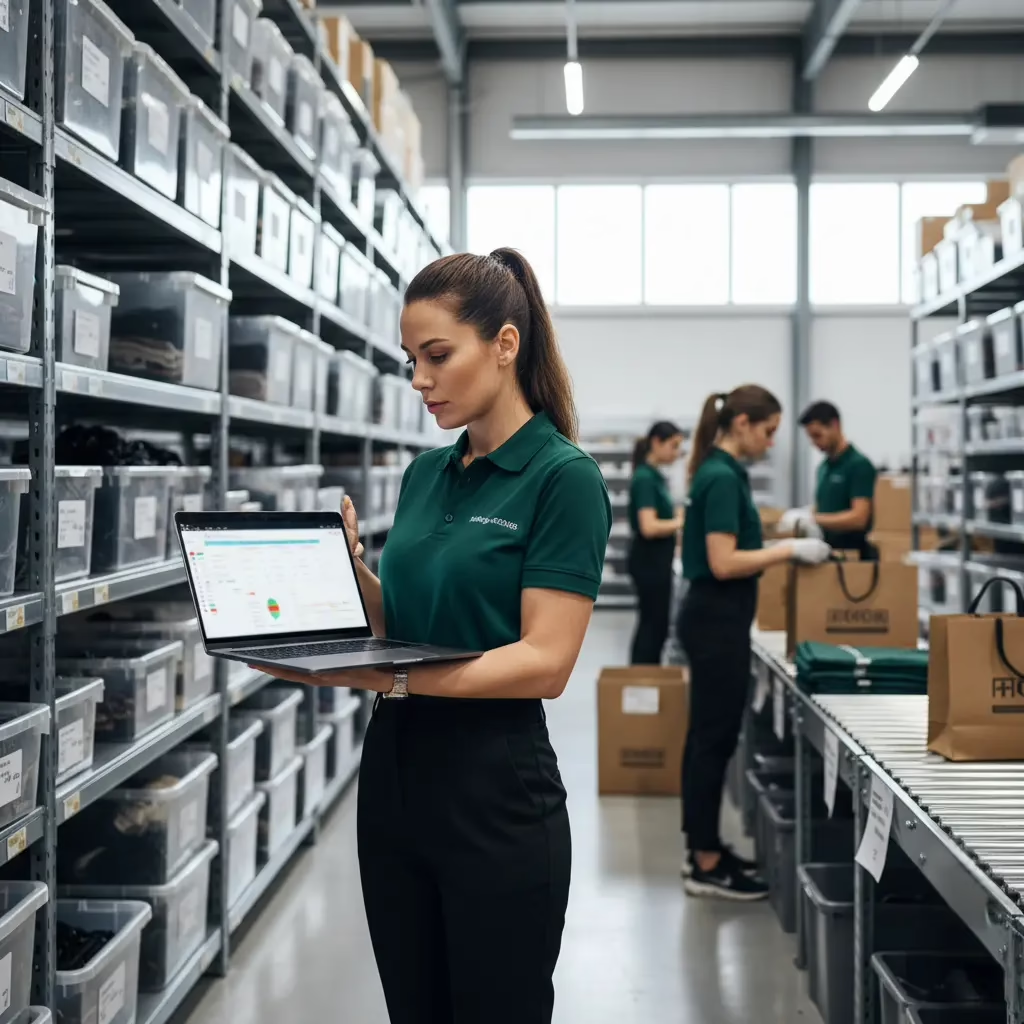
Getting your ecommerce order fulfillment process correctly might mean the difference between getting repeat customers and having to deal with expensive refunds. This complete guide gives a useful 7-step plan to help 3PL providers and expanding companies cut down on delivery times, enhance accuracy, and develop profitably across North America.
You will learn tried-and-true methods for making everything from receiving to returns easier, as well as inventory management techniques that work especially well for fashion and apparel. You will also learn how to change fulfillment from a cost center into a competitive advantage that drives growth.
Key Takeaways
- Learn the 7-step fulfillment framework: Each stage, from receiving to returns, builds on the one before it to make an online store that can fulfill orders without any problems.
- Focus on accuracy metrics that matter: To avoid expensive mistakes, aim for 99.5% accuracy in receiving, 97–99% accuracy in inventory, and 99.7% accuracy in picking.
- Use apparel-specific strategies: Dynamic slotting by size, color, and season, image-assisted selections for similar SKUs, and FIFO/FEFO inventory rotation all help cut down on returns and make things run more smoothly.
- Turn packaging into a growth tool: A professional presentation, customized unpacking experiences, and sizing guidelines can make customers happier and lower return rates by 12%.
- Leverage 3PL advantages: Cross-border domestication, FBA prep services, and regional distribution networks make it easier for businesses to get into new regions more quickly.
What is the process for fulfilling an ecommerce order?
The ecommerce order fulfillment process encompasses everything that happens from the time your merchandise arrives at your warehouse until the customer gets their order (and maybe even sends it back). This procedure includes getting and storing things, picking them up as orders come in, packing them safely, sending them out, and dealing with returns.
A well-planned fulfillment process does more than just move things around. It also makes sure that orders are shipped correctly and on schedule by standardizing processes, keeping track of inventories accurately, and automating shipment. Getting this procedure properly is very important for making money because return rates in ecommerce may be as high as 40%.
The 7-Step Ecommerce Order Fulfillment Process
Here’s how successful order fulfillment in ecommerce works, broken down into seven essential steps:
Step 1: Receiving and Putaway
Goal: Get products from dock to shelf in under 24 hours
The receiving process sets the foundation for everything that follows. Poor receiving leads to inventory discrepancies, mislabeled products, and picking errors down the line.
Key metrics to track:
- Receiving accuracy: 99.5% or higher
- Dock-to-stock time: Under 24 hours
- Vendor compliance rates
Best practices:
- Require advance shipping notices (ASNs) from suppliers
- Use vendor scorecards to track compliance and quality
- Implement velocity-based putaway in your warehouse management system
- Scan and verify every item during receiving
One client improved their vendor compliance from 72% to 94% simply by implementing vendor scorecards and clear requirements.
Step 2: Inventory Control
Goal: Keep track of your stock levels and make sure that products are in the best places.
Your ability to fill orders effectively and prevent running out of stock or selling too much depends on how accurate your inventory is.
Key metrics to track:
- Inventory accuracy: 97-99%
- Shrinkage rate: Below 1%
- Stockout rate: Under 2%
Best practices:
- Run regular cycle counts instead of annual physical counts
- Use ABC classification to focus attention on high-value items
- Implement FIFO (First In, First Out) for general inventory
- Use FEFO (First Expired, First Out) for items with expiration dates or color variations
- Apply dynamic slotting to place fast-moving items in easily accessible locations
Dynamic slotting reduced mispicks by 27% for one apparel brand by keeping popular sizes near packing stations during peak seasons.
Step 3: Order Batching and Wave Planning
Goal: Group orders efficiently to maximize picking productivity
Smart order batching can increase your lines picked per hour by 15-25% while ensuring orders ship on time.
Key metrics to track:
- On-time ship rate: 98% or better
- Lines per hour picked
- Order cycle time
Best practices:
- Batch orders by shipping deadline and carrier
- Create special queues for same-day or rush orders
- Group orders by warehouse zone to minimize travel time
- Plan waves based on your team’s capacity and cutoff times
Step 4: Picking
Goal: Select the right products quickly and accurately
Picking is where accuracy and speed come together. Most warehouses achieve 60-120 lines per hour, but the right systems and processes can push these numbers higher.
Key metrics to track:
- Pick rate: 60-120+ lines per hour
- Pick accuracy: 99.7% or higher
- Pick error rates by product type
Best practices:
- Use barcode scanning on every pick to verify accuracy
- Implement pick-to-light systems for complex size grids
- Consider voice picking for hands-free operation
- Choose the right picking method (batch, zone, or wave) based on your order profile
- Use image-assisted picking for similar-looking products
Pick-to-light systems reduced errors by 40% for fashion retailers dealing with similar styles in multiple colors and sizes.
Step 5: Packing
Goal: Protect products in transit while creating positive brand experiences
Packing isn’t just about getting items safely to customers—it’s an opportunity to reinforce your brand and reduce returns.
Key metrics to track:
- Damage rate: Below 0.5%
- Packaging cost per order
- Customer satisfaction scores related to packaging
Best practices:
- Right-size packaging to reduce shipping costs and environmental impact
- Include branded elements like tissue paper, stickers, or thank-you notes
- Add sizing guides or care instructions to reduce returns
- Take photos at pack for dispute resolution
- Use protective materials appropriate for each product type
Evolution Fulfillment’s Brand Fulfillment Model shows how thoughtful packing can become a growth driver. One client reduced returns by 12% simply by including sizing guide inserts in their packages.
Step 6: Shipping
Goal: Get orders to customers quickly and cost-effectively
Smart shipping combines speed, cost control, and reliability to meet customer expectations while protecting margins.
Key metrics to track:
- On-time delivery rate: 97% or better
- Shipping cost per order
- Carrier performance by service level
Best practices:
- Use rate shopping software to find the best carrier rates automatically
- Automate label printing and address validation
- Offer multiple shipping speeds to match customer preferences
- Consider cross-border domestication for international expansion
- Track shipments proactively and communicate delays quickly
Rate shopping typically reduces shipping costs by 5-15% without any impact on delivery speed.
Step 7: Returns and Reverse Logistics
Goal: Process returns quickly while recovering as much value as possible
An efficient returns process protects customer relationships and recovers inventory value.
Key metrics to track:
- Time to process refund: Under 48 hours
- Resale recovery rate: 70% or higher
- Return processing cost
Best practices:
- Offer exchanges before refunds when possible
- Code return reasons to identify product or process issues
- Implement quality control for returned items
- Create separate workflows for different return types
- Use return data to improve product descriptions and sizing
An exchange-first approach reduced refunds by 18% for one client while maintaining customer satisfaction.
Apparel-Specific Fulfillment Strategies
Fashion and clothing stores have special problems with fulfilling online orders because of differences in size, seasonal stock, and high return rates. Here’s how to deal with these problems:
Dynamic Slotting for Size, Color, and Season
Re-slot your warehouse weekly based on current demand patterns. During holiday seasons, move gift-popular items closer to packing stations. This approach typically reduces pick walk time by 15-30% and cuts mispicks by 20%.
Managing Size Runs and Prepacks
For wholesale orders or product launches, pre-assemble size runs to reduce individual picks. This strategy cuts handling touches by 10-20% and reduces prep errors by 30%.
Error-Proofing Similar Products
Use image-assisted picking systems and color-blind-safe labeling for similar SKUs. Require bin validation at every scan and add photo prompts for easily confused items. These steps reduce errors by 25-40%.
Reducing Return Rates
Include fit guides, size charts, and care instructions with shipments. Offer easy exchanges and use return reason codes to identify patterns. Close the feedback loop by sharing fit insights with your merchandising team to improve future product descriptions.
3PL Advantages: Services That Drive Growth
Third-party logistics providers offer specialized services that can accelerate your expansion:
Cross-Border Domestication
Instead of shipping internationally from your home country, stock inventory in target markets to reduce delivery times and landed costs. DDP (Delivered Duty Paid) domestication typically saves 8-20% on duties and taxes while improving delivery speed by 1-2 days.
FBA Prep Services
Amazon has strict requirements for FBA shipments. Professional prep services ensure compliance with labeling, packaging, and documentation requirements, reducing chargebacks by 50% or more.
Regional Distribution Networks
Strategic placement in 2-3 distribution centers can reach 80-90% of North American customers within 1-2 days. Model your average order value against distribution costs to find the optimal network configuration.
Technology Stack for Modern Fulfillment
Core Integrations
Connect your warehouse management system (WMS) with order management systems (OMS), ecommerce platforms, and carrier APIs for real-time inventory sync and automated label generation.
Smart Shipping Tools
Rate shopping software automatically selects the best carrier service for each shipment based on cost, speed, and destination. Rules-based logic can map service levels to carriers automatically.
Tracking and Visibility
Photo-at-pack documentation reduces customer service inquiries about order contents and provides proof for dispute resolution. Automated tracking updates keep customers informed throughout the delivery process.
Key Performance Indicators to Track
Monitor these essential metrics to optimize your ecommerce order fulfillment process:
Daily Metrics
- Order cut adherence
- Pick accuracy rates
- Carrier manifesting completion
Weekly Metrics
- Perfect order percentage
- Order cycle time
- Lines per hour productivity
- Shipping cost per order
Monthly Metrics
- Inventory accuracy
- Return processing time
- Customer satisfaction scores
- Overall fulfillment costs
Benchmark Targets
- Receiving accuracy: 99.5%+
- Inventory accuracy: 97-99%
- Pick accuracy: 99.7%+
- On-time ship rate: 98%+
- Damage rate: <0.5%
- Time to refund: <48 hours
When to Choose a 3PL vs. In-House Fulfillment
Volume Thresholds
Consider a 3PL when you’re processing more than 2,500 outbound orders per month or handling more than 500 pallet positions. Multi-channel complexity often tips the scales toward outsourcing even at lower volumes.
Complexity Factors
- Multiple sales channels (DTC, wholesale, Amazon, international)
- EDI requirements for retail customers
- Specialized compliance needs
- Cross-border shipping requirements
- Seasonal volume fluctuations
Cost Considerations
Compare total landed costs including labor, space, technology, shipping rates, and management overhead. Factor in the opportunity cost of management attention diverted from core business activities.
Evolution Fulfillment specializes in helping growing brands navigate these decisions with transparent cost modeling and phased implementation approaches.
Implementation Roadmap
Days 1-30: Assessment and Planning
- Map current processes and identify improvement opportunities
- Define success metrics and assign ownership
- Create vendor scorecards and compliance requirements
- Document standard operating procedures
Days 31-60: Integration and Testing
- Implement system integrations between platforms
- Run parallel testing with a limited SKU set
- Train team members on new processes
- Establish quality control checkpoints
Days 61-90: Scale and Optimize
- Expand to full product catalog
- Monitor KPIs and adjust processes
- Set up automated reporting and dashboards
- Document lessons learned and best practices
Frequently Asked Questions
Q: How can I reduce order error rates?
A: Focus on barcode scanning at every touch point, implement cycle counting, use dynamic slotting to reduce pick travel, and enforce vendor compliance with advance shipping notices.
Q: What’s the best picking strategy for small warehouses?
A: Start with batch picking for similar order types, then add zone picking as you grow. Consider pick-to-light systems if you handle many similar SKUs in different sizes or colors.
Q: How do I measure fulfillment speed?
A: Track order cycle time (from order placement to shipment), dock-to-stock time for receiving, and pick rates by product category. Set SLA targets for each step.
Q: What can I do about high return rates in apparel?
A: Include detailed sizing information, offer fit guides, make exchanges easy, and analyze return reasons to identify patterns. Consider virtual try-on tools for high-return categories.
Transform Your Fulfillment Into a Competitive Advantage
Efficient order fulfillment ecommerce operations do more than just ship products—they create customer experiences that drive repeat purchases and reduce costs that eat into margins. The 7-step framework outlined here provides a foundation for scalable growth, while apparel-specific strategies address the unique challenges of fashion fulfillment.
Whether you’re considering outsourcing to a 3PL or optimizing your in-house operations, focus on accuracy metrics, leverage technology for automation, and remember that packaging and returns handling are growth opportunities, not just operational necessities.
Ready to see how these strategies can transform your fulfillment operations? Evolution Fulfillment’s B2C order fulfillment services help growing brands implement these best practices with measurable results. Explore our services and discover how we turn fulfillment challenges into competitive advantages.