Managing a fashion wholesale business means keeping dozens of moving parts in sync. One miscommunication between your warehouse and sales team can trigger stockouts. A single inventory error can damage retailer relationships you’ve spent years building. The solution? Enterprise resource planning systems integrate your core business functions into one connected platform. For fashion brands under $20M juggling both B2C and B2B channels, this integration isn’t just convenient—it’s essential for survival. This guide explores how ERP integration solves common wholesale challenges, what to look for in a solution, and real examples from brands that have transformed their operations.
What Are Enterprise Resource Planning Systems?
Enterprise resource planning systems integrate different business processes into a unified platform. Think of an ERP as your business’s central nervous system, connecting inventory, accounting, sales, and fulfillment. For fashion brands, ERP systems typically handle:
- Inventory tracking across warehouses and sales channels
- Order management from purchase orders to fulfillment
- Financial accounting including invoicing and reporting
- Customer relationship data for wholesale and retail accounts
- Production planning for manufacturing and suppliers When enterprise resource planning systems integrate properly, your team stops juggling disconnected spreadsheets and starts working from one source of truth.
The Wholesale Channel Management Challenge
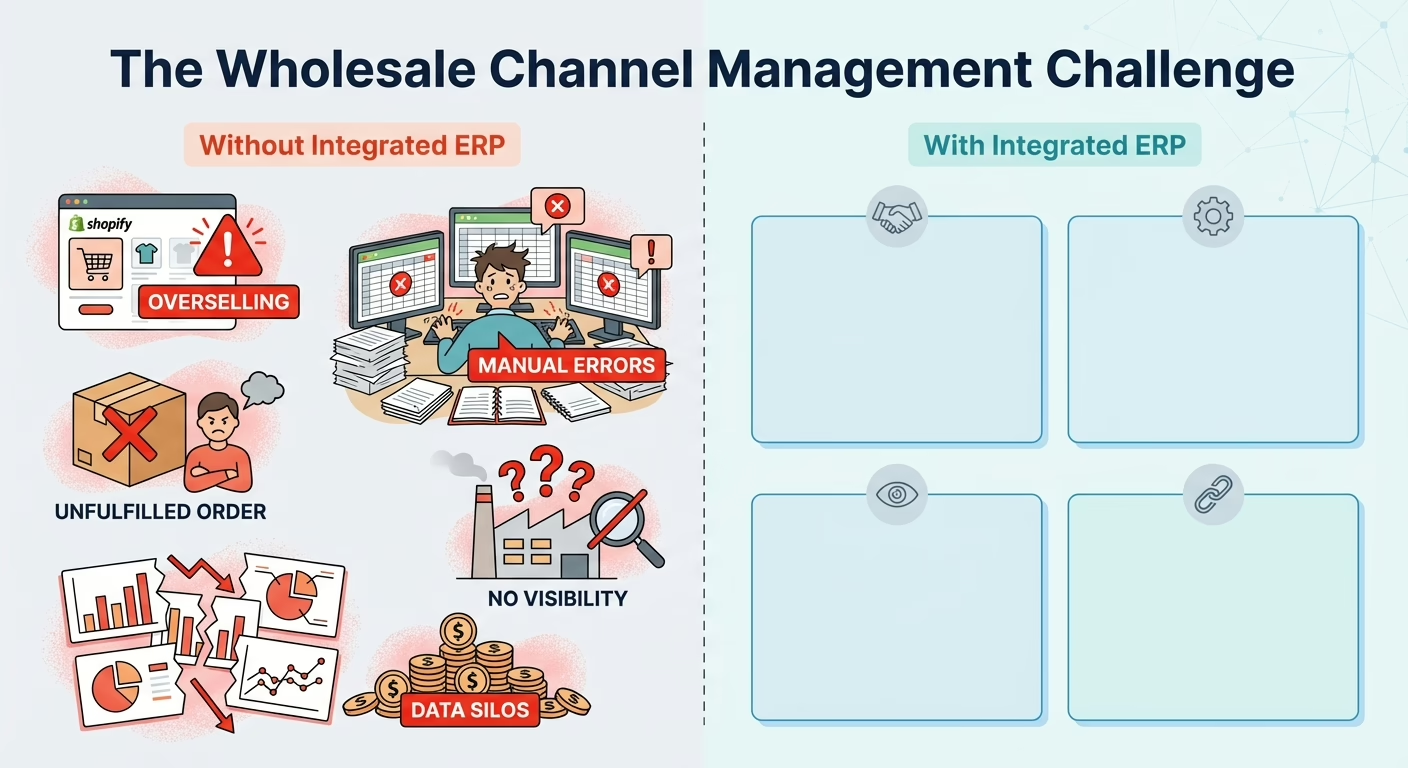
Fashion brands face unique inventory complexities. You’re not just managing products—you’re tracking sizes, colors, seasons, and multiple sales channels simultaneously. Common pain points include: Overselling across channels. Your Shopify store sells the last unit of a popular style while a wholesale order for the same item sits unfulfilled. Without real-time inventory sync, you’re constantly firefighting stockouts and disappointing customers. Manual data entry errors. Your team wastes hours copying order details between systems. One typo means wrong shipments, frustrated buyers, and wasted time fixing mistakes. Poor visibility into production. You can’t tell which purchase orders are delayed or which styles are arriving next week. This blind spot makes it impossible to promise accurate delivery dates to retailers. Disconnected financial data. Your accountant needs three different reports to reconcile sales across channels. Month-end close takes days instead of hours because data lives in silos. These problems compound as you scale. What worked with 50 SKUs and three wholesale accounts becomes unmanageable at 500 SKUs and 30 accounts.
How ERP Integration Transforms Wholesale Operations
When enterprise resource planning systems integrate your business functions, three key benefits emerge:
Improved Operational Efficiency
Real-time inventory sync eliminates double-selling. When a unit sells on Shopify, your wholesale platform immediately reflects the change. Your team stops manually updating stock counts across systems. Automated order routing sends each order to the right fulfillment location without human intervention. This reduces processing time from hours to minutes.
Enhanced Data Accuracy
Single data entry means fewer mistakes. Enter a purchase order once, and the information flows automatically to inventory forecasting, accounting, and fulfillment systems. Unified customer profiles give your sales team complete order histories. They can answer questions about past purchases, returns, and account status without searching multiple databases.
Better Strategic Decisions
Consolidated reporting shows which products perform best across all channels. You can identify your top wholesale accounts, seasonal trends, and margin opportunities from one dashboard. Production visibility helps you plan inventory more strategically. See which styles are inbound, compare forecasted demand, and adjust purchase orders before problems arise.
The Blastramp Solution for Fashion Wholesale
Blastramp addresses these challenges with multi-channel inventory management built specifically for fashion brands. After 20 years servicing the apparel industry, they understand the unique complexities of size-color matrices and wholesale distribution. Centralized Inventory Hub All sales channels—Shopify, wholesale platforms like NuORDER and JOOR, and dropship partners—pull from one real-time inventory source. This prevents overselling and ensures accurate stock availability across your business. Seamless Channel Integrations Blastramp connects your existing tools rather than forcing you to replace them. Integrations include:
- Ecommerce platforms (Shopify, WooCommerce)
- Wholesale systems (NuORDER, JOOR, Brandboom)
- Accounting software (QuickBooks, Xero)
- Shipping and returns (ShipStation, Loop)
- ERPs and 3PLs (Xorosoft, Logiwa, Extensiv) Production and Purchase Order Management Create and edit purchase orders within the platform. Track inbound shipments and hold suppliers accountable with company-wide visibility. Your team knows exactly what’s arriving and when. Efficient Returns Processing Built-in returns management tools or integrations with platforms like Loop ensure returned products get back into available inventory quickly. This minimizes revenue loss and keeps your virtual shelves stocked. Advanced Reporting and Business Intelligence Analyze sales data across channels to identify best-sellers, optimize order quantities, and calculate margins. Detailed customer profiles show complete order histories and account summaries for better relationship management.
Real Success Stories from Fashion Brands
LUV AJ: Saving Countless Hours Amanda Thomas, owner and designer of LUV AJ, explains: “The visibility and ease our team now has to process orders and manage inventory has saved us countless hours of work.” By consolidating their operations through Blastramp, LUV AJ eliminated manual inventory updates and streamlined order processing across multiple sales channels. Supra Distribution: 10+ Years of Reliable Service Jonathon Wagner, Operations Coordinator at Supra Distribution, shares: “We have been using Blastramp for over 10 years. Their team has consistently made improvements to meet the evolving needs of our business. Whether it’s Wholesale, Amazon, or Ecommerce, Blastramp has been up to the task. The reporting features make it easy to analyze inventory, finances, and sales.” Ambler Mountain Works: Freedom to Focus on Growth Christian Rawles, owner of Ambler Mountain Works, notes: “Instead of spreadsheets and pivot tables, Blastramp allows us to manage all the orders from Brandboom and Shopify while keeping our inventory in sync with our 3PL. This ultimately frees up more time to spend on designing and growing our brand.” These brands share a common theme: ERP integration freed their teams from administrative bottlenecks, allowing them to focus on design, marketing, and strategic growth.
The Future of ERP Integration in Fashion
As fashion brands expand their digital presence, ERP systems will continue evolving to support new channels and technologies. AI-powered forecasting will predict demand more accurately by analyzing historical sales patterns, seasonal trends, and external factors. This helps brands optimize inventory levels and reduce excess stock. Expanded marketplace integrations will become standard as more wholesale buyers discover products through digital platforms. ERPs will need to manage inventory and orders across an even wider range of channels. Enhanced mobile capabilities will let teams manage critical operations from anywhere. Sales reps can check inventory, process orders, and update customer information on the go. Sustainability tracking will help brands monitor their environmental impact. ERPs will track material sourcing, production waste, and carbon footprint data alongside traditional business metrics.
Take the Next Step Toward Connected Operations
Enterprise resource planning systems integrate the scattered pieces of your wholesale business into one cohesive platform. This integration eliminates overselling, reduces manual errors, and provides the visibility needed for strategic growth. For fashion brands under $20M managing both B2C and B2B channels, the question isn’t whether to implement ERP integration—it’s how soon you can start. Blastramp has spent two decades helping fashion brands solve these exact challenges. With integrations spanning ecommerce, wholesale, accounting, and fulfillment, they offer the specialized expertise apparel businesses need. Ready to transform your wholesale operations? Request a demo to see how Blastramp can connect your business and eliminate inventory headaches for good.


