Many ERP systems fail wholesale distributors by treating inventory, fulfillment, and returns as separate issues. This fragmented approach costs you time, money, and customer loyalty. This article cuts through the noise to detail the essential features, realistic implementation timelines, and the measurable return on investment that apparel and fashion wholesalers should demand from their technology. You will learn what to look for in a system, including real-time multi-channel inventory, integrated warehouse management (WMS), and automated order fulfillment. We’ll explore how to select a vendor that truly unifies your business, prevents stockouts, speeds up returns, and proves its value with clear performance indicators.
Why Wholesale Distributors Need a Modern ERP
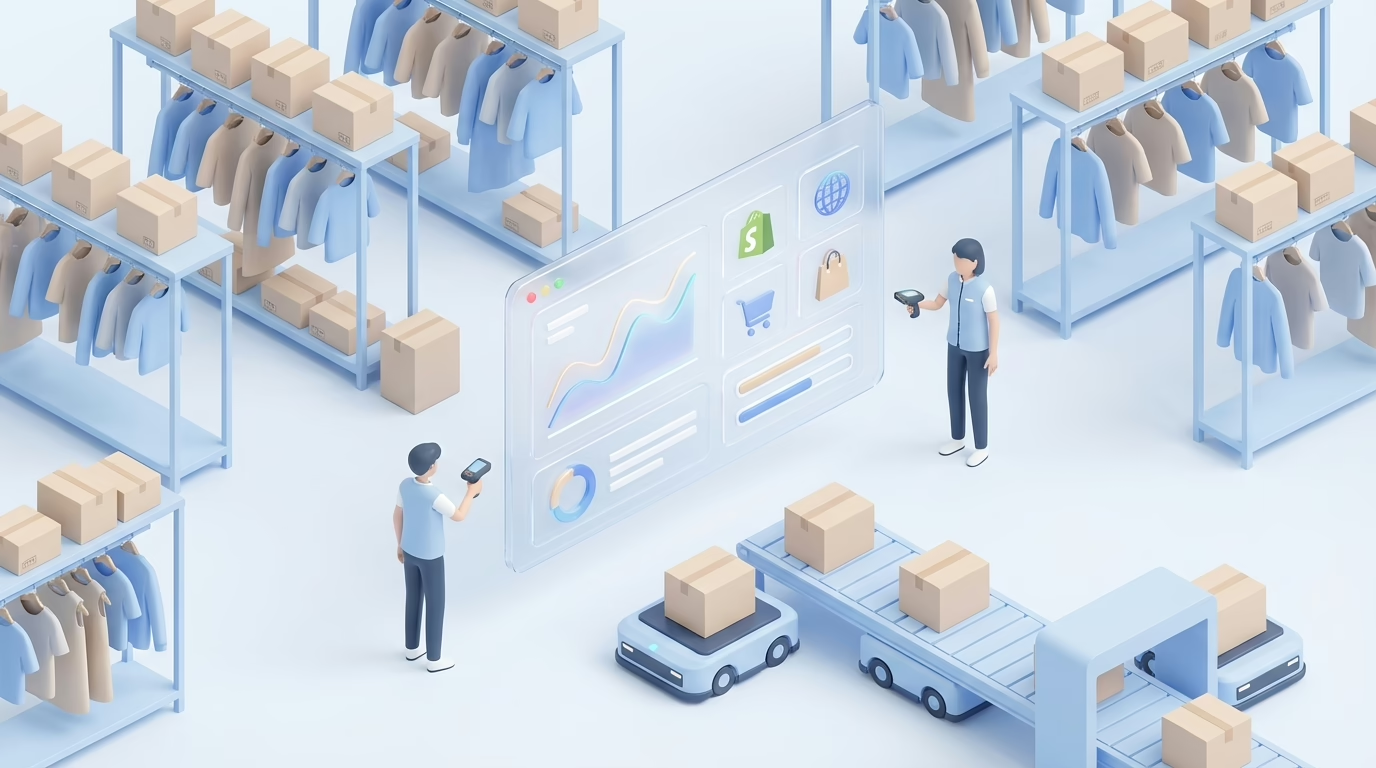
The core challenge for wholesale distributors, especially in fashion, is managing complexity. Pre-packs, size variations, seasonal deadlines, and multiple sales channels (like Shopify and B2B portals) create a high risk of overselling and tangled fulfillment. Manual inventory checks are often only about 63% accurate, leading to constant discrepancies. A unified ERP system solves this by connecting every part of your operation. An ERP for wholesale distributors is a single system that links inventory, order management, warehousing, purchasing, accounting, and analytics. It syncs stock levels in real time across all B2B and DTC channels, automates fulfillment, and simplifies returns to protect your profit margins.
The Unique Pressures of Fashion and Apparel
The fashion industry operates on seasonality, pre-packs, and complex size curves, which makes inventory allocation difficult. Imagine a pre-pack order being split between a Shopify sale and a wholesale purchase order, instantly causing an oversell. Without a unified system, your team is left to manually reconcile orders, an expensive and error-prone process. Apparel businesses require purpose-built logic, not a generic accounting ledger.
What Does “Unified Operations” Mean?
A unified operation provides real-time inventory visibility across every channel, a single source of truth for stock and orders, and automated rules for fulfillment. The immediate benefit is preventing double-selling and reducing order cancellations. Let’s look at the specific components that an effective ERP must bring together.
Key Features in ERP Software for Wholesale Distributors
Your ERP should unify core modules to create a seamless flow of data from purchase order to final accounting. An integrated system allows an inbound shipment to be automatically allocated to pre-sold wholesale orders and Shopify backorders. This creates one ledger for stock, orders, and financials, delivering a clear view of your business health.
1. Real-Time, Multi-Channel Inventory Sync with Integrated WMS
Real-time inventory data across all your sales channels and locations is non-negotiable. It stops oversells before they happen and speeds up the resolution of stock disputes. When your B2B portal, Shopify store, and 3PL all pull from the same live inventory data, you operate with confidence. An integrated WMS is far superior to a bolt-on solution. Capability Integrated WMS Bolt-on WMS Latency Real-time Batch delays Pick Accuracy 99%+ with scanning Lower unless customized Partial Order Release Native Often requires custom work Complexity Single platform Multiple vendors & contracts With integrated barcode scanning, you can achieve over 99% picking accuracy. This unified approach also allows for advanced functions like partial order releases, which let you ship pre-sold wholesale cartons while simultaneously fulfilling individual DTC orders from the same inventory pool.
2. Automated Order and Fulfillment Management
Automation is your key to reducing lead times and cutting costs. An effective ERP automates the creation of pick waves, routing orders to the most efficient fulfillment location, whether it’s your in-house warehouse or a 3PL partner. This automation minimizes manual errors and shortens the time from click to ship.
3. Streamlined Returns and Reverse Logistics
Returns are a significant part of the apparel business. Your ERP must include a robust returns management module that handles RMAs, product grading, refurbishment, and write-offs. With automated restocking rules and integrations with platforms like Loop Returns, you can ensure that returned items are processed efficiently, protecting your margins.
4. Strong Purchasing and Inbound Control
Gain control over your inbound supply chain with features like open-to-buy planning and receipt matching. When your ERP uses advanced shipping notices (ASNs) to guide putaway, you prevent misallocation of new inventory from the moment it arrives. Better inbound control directly translates to lower carrying costs.
5. Flexible Pricing and Contract Management
Wholesale distribution requires sophisticated pricing logic. Your ERP should support tiered pricing, customer-specific contracts, and volume discounts with a full audit trail. Price errors can damage credibility, so a system that manages this complexity is essential for maintaining strong partner relationships.
6. Critical System Integrations
The right integrations save months of custom development work. Prioritize an ERP with native connectors for essential platforms like Shopify, QuickBooks, ShipStation, and major B2B portals (Joor, NuORDER). Additionally, look for pre-built 3PL connectors and an open API for future needs.
7. Actionable Reporting and Business Intelligence
Data is only useful if it leads to better decisions. Your ERP should provide demand forecasting tools to improve inventory turns and link those forecasts to your purchasing schedule. Access to business intelligence (BI) tools and clear KPI dashboards enables you to make informed choices about your business.
The Operational Impact of the Right ERP
Implementing a unified ERP system delivers tangible improvements across your entire wholesale distribution business.
- Prevent Stockouts and Oversells: Expect a 10–15% reduction in order cancellations thanks to unified inventory control. Real-time allocation prevents overselling during high-volume sales events, building customer trust.
- Reduce Fulfillment Costs and Lead Times: An integrated WMS with wave picking can speed up your pick-and-pack process by 20–30%. Automatically routing orders to the cheapest or fastest 3PL partner saves significant shipping costs.
- Strengthen Cash Flow and Margins: Improved inventory turns and fewer write-offs directly boost your bottom line. By converting stagnant inventory into cash more quickly, you improve profitability through better process control.
Implementation: What to Expect
Migrating to a new ERP doesn’t have to be a multi-year project. For most small-to-midsize distributors, a phased rollout can be completed in 8–16 weeks.
- Timeline: A typical go-live schedule involves an 8- to 16-week implementation period, including 2-3 weeks for user acceptance testing (UAT). Phased rollouts, where you launch one module at a time, are much less risky than a “big bang” approach.
- Data Migration: The success of your implementation depends on clean data. Start by organizing your current SKUs, pack definitions, and size curves. Running the new system in parallel with the old one for a few weeks helps identify issues before the final cutover.
- Change Management: User adoption is critical. Invest in role-based training for your team, create clear standard operating procedures (SOPs), and align everyone around the new KPIs.
Pricing, ROI, and Vendor Selection
When evaluating vendors, look for transparent subscription models that clearly outline fees. Avoid hidden costs for integrations or support. A payback model can be built by calculating labor savings from automation, reduced cancellations, and lower inventory carrying costs. Many businesses see a full return on investment in 6–12 months. Use this checklist to compare potential vendors: Criteria Generic ERP Apparel-Focused ERP Packs/Seasonality Requires heavy customization Native support WMS Functionality Often a separate, bolt-on system Varies by vendor; look for integrated Integrations Custom work often needed Some native connectors available Implementation Time Long Medium Pricing Clarity Often opaque and complex Mixed; seek transparency Always ask for a live demo that shows the system in action, particularly a scan-to-pack workflow.
When to Upgrade from QuickBooks and Plugins
Are you outgrowing your current setup? Signs include monthly inventory mismatches greater than 2%, a reliance on manual journal entries to reconcile data, and a sprawling collection of plugins that don’t communicate well. If your Shopify inventory and QuickBooks data diverge weekly, it’s time to upgrade. A phased transition path (e.g., OMS → WMS → accounting) can minimize disruption.
Final Thoughts
The unique complexities of wholesale apparel—from pre-packs and size curves to managing B2B and B2C channels—demand a specialized solution. A unified ERP with an integrated WMS, native apparel logic, and seamless integrations is no longer a luxury; it’s a necessity. The right system leads to fewer oversells, faster fulfillment, and a healthier cash flow, with a measurable ROI achievable in under a year. As you evaluate your options, prioritize vendors that offer proven apparel workflows, native integrations, and transparent pricing. Focus on finding a partner that can demonstrate real-world outcomes, not just a list of features.


