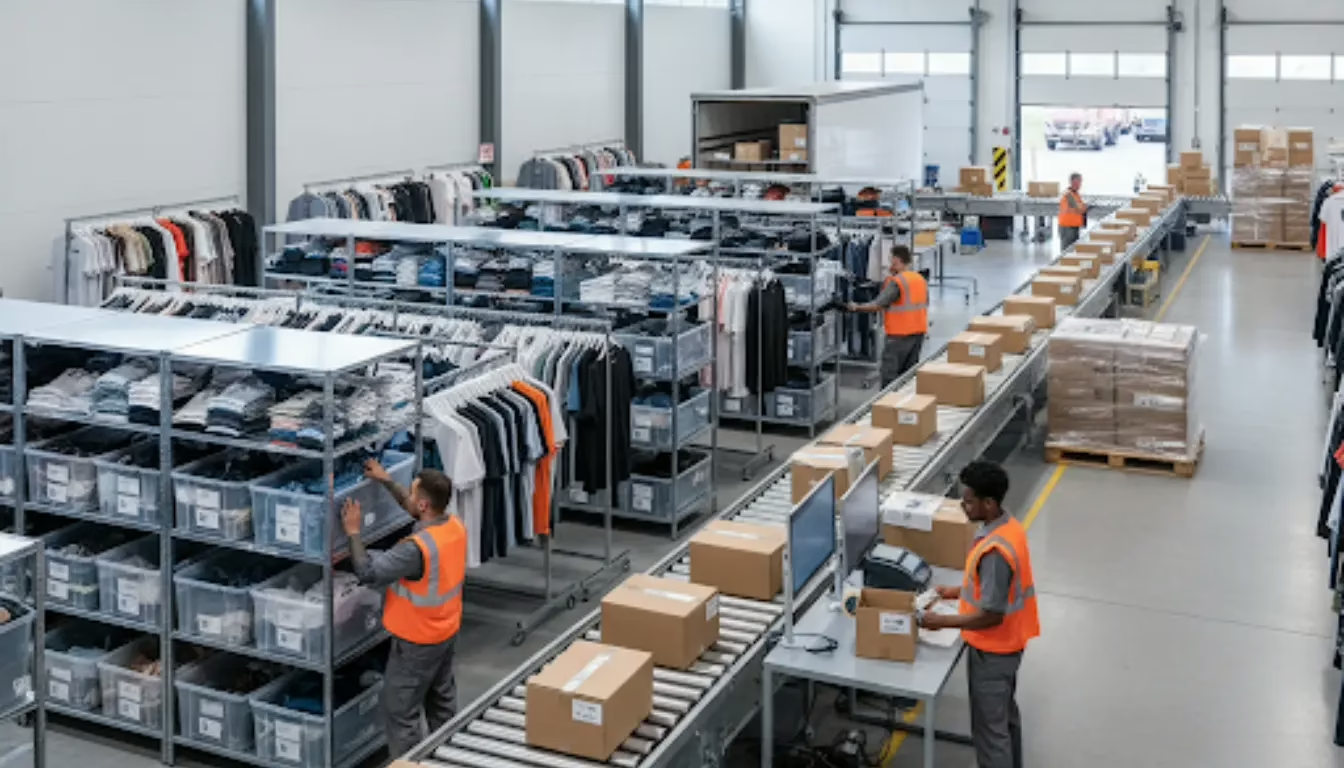
Growing a fashion brand is exciting—but inventory chaos can stop momentum fast.
If you’re juggling Shopify orders, wholesale buyers, returns, and warehouse spreadsheets, you’ve probably asked yourself:
“Why does scaling feel harder than it should?”
That’s exactly the problem that warehouse management software (WMS) solves.
For fashion brands making under $20M, a WMS is not about being complex. Having clarity, control, and confidence is essential as you grow.
Let’s break it down in plain language.
What Is Warehouse Management Software (WMS)?
Warehouse management software is the system that runs your warehouse day to day.
It coordinates:
- Receiving inventory
- Putting products away in the right locations
- Picking the right items
- Packing them correctly
- Shipping orders on time
- Counting inventory so numbers stay accurate
Everything is tracked with barcode scans, so you always know what you have, where it is, and what’s available to sell.
For fashion brands, WMS must also handle:
- Size and color variants
- High return volumes
- Wholesale + DTC + marketplace orders
- Multiple warehouses or 3PLs
Without it, brands rely on spreadsheets or ERP workarounds that break the moment volume spikes—especially during BFCM.
Why Fashion Brands Can’t Rely on ERP or Spreadsheets Alone
Many brands start with spreadsheets or an ERP system—and that’s normal.
But here’s the reality:
- ERPs are great for finance and planning
- They’re not built for warehouse execution
Studies show ERPs only meet 45–75% of warehouse needs.
Example:
- Your ERP creates a purchase order
- Your WMS makes sure the right size, color, and quantity are scanned into the right bin—and picked correctly later
Best practice:
Use ERP for planning.
Use WMS for execution.
That separation is what prevents oversells, mis-picks, and angry customers.
The Real Benefits of a WMS for Apparel Brands
Fashion brands using a purpose-built WMS typically see:
- 20–40% fewer picking errors
- 15–30% faster fulfillment
- Better on-time, in-full (OTIF) performance
- Faster restocks from returns
- Less manual work—and fewer late nights fixing mistakes
In short: more orders shipped correctly, with less stress.
Why Apparel Needs an Apparel-First WMS
Apparel is different.
You deal with:
- 2–4× more variants than other industries
- 20–30% return rates
- Seasonal drops and sudden volume spikes
Generic systems don’t understand:
- Size/color matrices
- Pre-packs and size runs
- Returns grading
- Partial wholesale releases
An apparel-first WMS is built specifically for how fashion actually operates—not how software companies think it should.
The 6 Critical WMS Functions for Fashion Brands
Each of these maps directly to outcomes you value: fewer errors, faster shipping, and easier scaling.
1. Inventory Accuracy Built for Size & Color Variants
A fashion WMS must:
- Treat every size/color as its own SKU
- Enforce barcode scanning at every move
- Support ABC cycle counting (your most valuable items counted more often)
Results:
- Up to 50% fewer inventory variances
- 20–40% fewer warehouse errors
That means fewer “sorry, we oversold” emails—and more trust with buyers.
2. Real-Time Multichannel Inventory Sync
Disconnected systems cause overselling.
A WMS synced with platforms like Shopify, JOOR, and marketplaces:
- Updates inventory in real time
- Reserves stock for wholesale SLAs
- Supports partial releases and channel holds
Brands often reduce oversells by 80%+ simply by centralizing inventory.
3. Returns Workflows That Get Product Back Faster
Returns don’t have to kill momentum.
With returns workflows integrated from tools like Loop Returns, brands can:
- Grade returns quickly
- Restock sellable items faster
- Route imperfect items to secondary channels
Cutting 2–5 days off restock time can boost sell-through 5–10%—real revenue reclaimed.
4. Picking & Packing That Saves Labor
Different orders need different strategies:
- DTC → batch or pick-to-light
- Wholesale → zone or wave picking
Scan-to-pack verification drops errors below 0.3%.
Saving 60 seconds on each order at 1,000 orders a day is like having 2 full-time workers. You can do this without hiring anyone.
5. Shipping, 3PL, and Multi-Warehouse Control
A fashion WMS should:
- Rate-shop carriers (saving 5–12%)
- Generate ASNs and UCC-128 labels
- Centralize visibility across 3PLs
This prevents chargebacks and keeps promises to wholesale partners.
6. Reporting That Actually Helps You Decide
Instead of spreadsheets, you get:
- OTIF tracking
- Lines per hour
- Aged inventory views
- Returns impact reporting
Clear data means better buys, better staffing, and fewer surprises.
When Should a Brand Move to a WMS?
If you’re experiencing any of these, it’s time:
- 150+ orders/day
- 1,000+ SKUs
- Wholesale + DTC complexity
- 20–30% returns
- Manual fixes becoming daily work
Waiting too long often leads to BFCM breakdowns.
Cloud WMS vs On-Prem for Growing Brands
For fashion brands under $20M:
- Cloud (SaaS) WMS wins
Why?
- Faster setup
- Lower total cost
- Automatic updates
- No heavy IT overhead
That’s how brands get ROI in 60–120 days, not years.
FAQs – For Growing Fashion Brands
Is a WMS hard to use?
No. Apparel-first systems are designed for warehouse teams—not engineers.
Will it work with Shopify and wholesale tools?
Yes. Native integrations and webhooks are standard.
Is WMS exclusive to large brands?
No. Modern WMS platforms are priced and designed for growing brands.
What is ROI speed?
Most brands see measurable gains within 2–4 months.
Final Thoughts: One Giant Leap for Brandkind
For fashion brands, warehouse management software is essential. It helps turn growth into profit instead of chaos.
By focusing on:
- Inventory accuracy
- Multichannel sync
- Returns speed
- Fulfillment efficiency
- Scalable operations
You stop reacting—and start scaling with confidence.