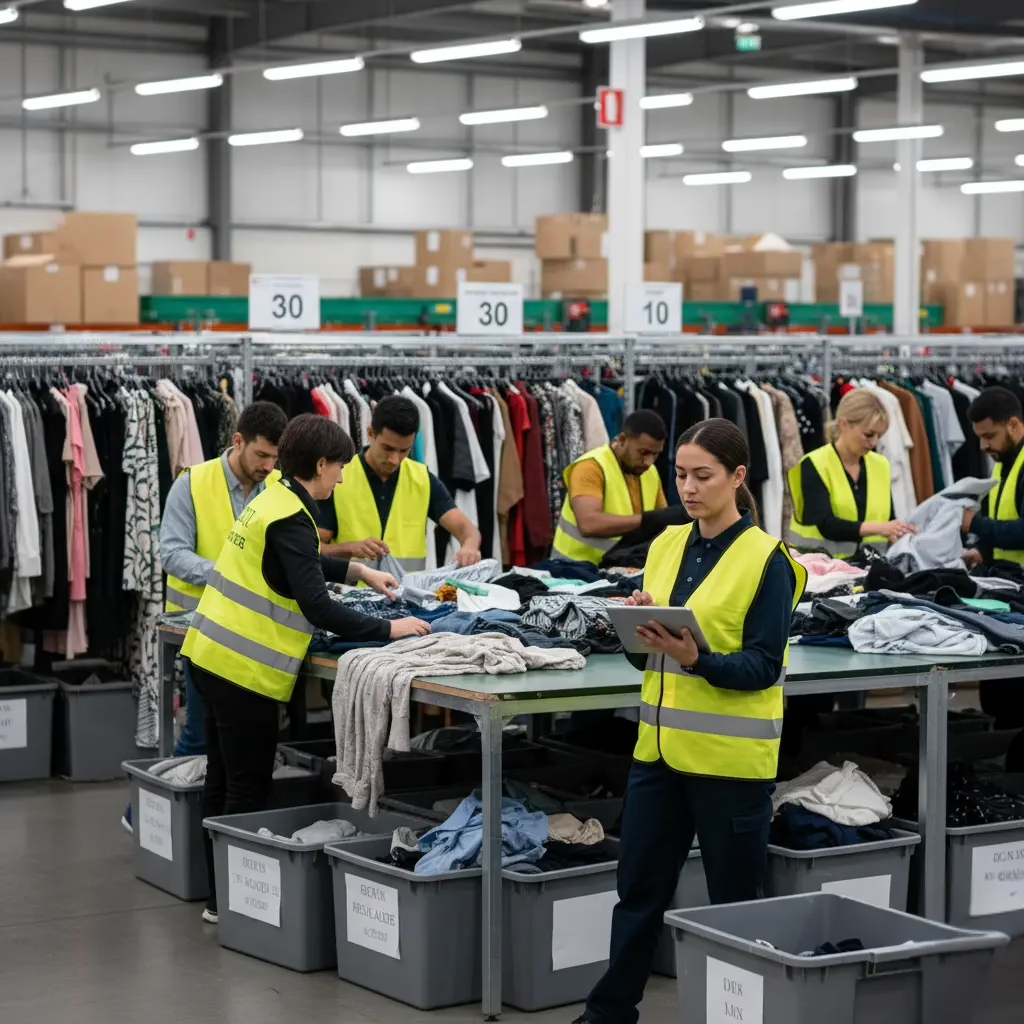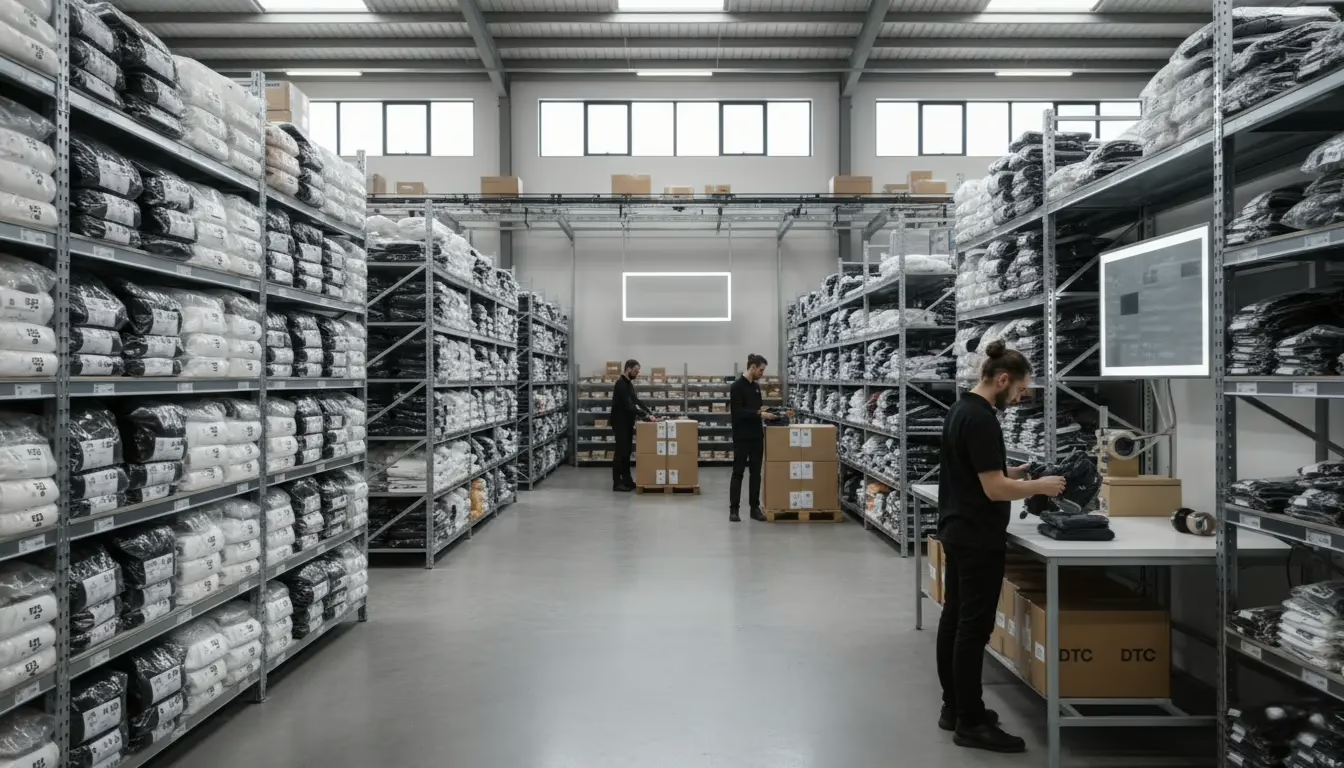
Your fashion brand is growing fast—but your warehouse is struggling to keep up. Orders are coming in from your online store, wholesale partners need accurate stock at the right time, dropship partners are pulling inventory, and seasonal products lose value quickly. At the same time, your current system treats every item the same, without understanding key details like size, color, and style. That lack of structure creates confusion, errors, and missed sales.
The issue is not your team—it is the technology behind your warehouse. Most standard warehouse management systems are built for simple products, not fashion. They are not designed to handle pre-orders before production is complete, fast seasonal changes, or inventory spread across direct-to-consumer, wholesale, and dropshipping channels. As a result, stock levels fall out of sync and operations slow down.
Fashion brands need a warehouse management system built specifically for omnichannel selling. The right system tracks every size and color variation and updates inventory in real time across all sales channels the moment a purchase is made. In this guide, we break down what truly matters in a fashion-ready WMS and explain how to avoid complex enterprise software that costs more, takes longer to set up, and does not solve real fashion logistics problems.
Why Fashion Brands Need Specialized WMS
It is 8 a.m. on a busy Tuesday, and everything is happening at once. Wholesale orders arrive through JOOR, online orders come in from Shopify, and your dropship partners are asking if inventory is available. Your spreadsheet shows 47 units of your bestselling navy sweater—but when you break that down by warehouse, color, and size, the exact version customers want is already sold out.
These are the problems that keep fashion operators awake at night:
Disconnected sales channels cost you money
Your online store, wholesale platforms, and dropship partners all pull inventory separately. Because they are not synced in real time, one channel oversells while another sits idle.
Size, color, and style combinations explode SKU counts
A single product can turn into dozens of SKUs once you factor in sizes and colors. At scale, tracking this manually becomes unmanageable and leads to constant errors.
Seasonal inventory moves too fast for generic systems
Fashion inventory is time-sensitive. Pre-orders, seasonal launches, and mid-season reallocations need smart rules. Most warehouse systems are not built for this level of complexity.
Returns take too long to go back into stock
When returned items are not inspected and re-added to available inventory quickly, you lose valuable selling time—especially during peak seasons.
Manual work burns out your team
Instead of improving operations or planning growth, your team spends hours every week updating spreadsheets, fixing mistakes, and answering inventory questions.
The core issue is not effort—it is the software. Generic warehouse systems treat fashion products like identical items in a box. They ignore what actually matters: size and color variations, fast seasonal changes, and the need to manage B2C, wholesale, and dropship orders at the same time.
This is exactly where warehouse management systems built specifically for fashion make a difference. They are designed to handle complexity, move inventory intelligently, and keep every sales channel in sync as your brand grows.
What Is Warehouse Management System Software? (And Why Fashion Needs More)
A warehouse management system (WMS) is the control center for inventory and fulfillment. It tracks stock in real time, automates picking and packing, and keeps orders synced across all sales channels. For fashion brands, it connects B2C, wholesale, and dropship operations so inventory stays accurate and overselling is avoided.
Generic WMS platforms are not built for fashion. They treat every size and color as separate items, offer limited channel integrations, and rely on rigid inventory rules that fail during pre-orders and seasonal shifts. Many also force brands to choose between B2C or B2B workflows.
Fashion-optimized WMS platforms are designed around how fashion actually works. They understand style–color–size relationships, sync deeply with platforms like Shopify and wholesale tools, support seasonal logic, and route B2C, wholesale, and dropship orders at the same time. They are also faster to implement and easier for growing teams to use.
In short, a fashion-focused WMS turns inventory complexity into control—and helps brands scale without chaos.
The Fashion Complexity Factor: Why Your SKU Count Isn’t the Real Problem
When you sell a sweater in three colors and four sizes, customers see one product. Operationally, however, that single product becomes 12 different SKUs. Generic inventory systems treat each of those SKUs as completely unrelated items, forcing your team to manually manage connections that should happen automatically.
Fashion-optimized platforms are built differently. They understand the style-color-size matrix and recognize that all 12 SKUs belong to the same product family. When a customer buys a navy sweater in size M, the system immediately knows which sizes or colors are still available and can support smarter recommendations, substitutions, and allocation decisions.
This approach reflects how fashion inventory truly works. Without it, you end up managing disconnected variants instead of complete products—which is why inventory numbers drift, availability looks wrong, and decisions are harder than they should be.
Seasonal Inventory Cycles Generic Systems Can’t Handle
Fashion inventory moves in seasons, not steady cycles. Spring collections must sell out by midsummer, fall inventory arrives while summer clearance is still active, and pre-orders often begin months before products are physically available. Generic warehouse systems are built for static inventory and cannot adapt to this pace or overlap.
Fashion-optimized systems are designed for seasonal reality. They separate pre-order inventory from available stock, route clearance items to the right sales channels, and adjust safety stock based on seasonal demand. This built-in logic keeps inventory accurate and sellable as collections overlap.
When peak season arrives and pre-orders, in-season sales, and clearance all run at once, seasonal intelligence is what prevents confusion, missed sales, and operational breakdowns.
How WMS Connects Your Omnichannel Ecosystem
Your warehouse is not just a place to store products—it is where all your sales channels collide. Every order from wholesale, online, and dropship partners ultimately competes for the same inventory.
Consider a typical moment: a wholesale order arrives through JOOR, a few minutes later a customer buys the same item on Shopify, and a dropship partner requests fulfillment at the same time. Without a central system, inventory updates lag, priorities are unclear, and different platforms show different stock numbers. This is how overselling happens.
A warehouse management system sits at the center of this ecosystem. It sees all orders in real time and applies clear business rules. The system knows which orders matter most—such as prioritizing wholesale contracts, then direct-to-consumer orders, and finally dropship fulfillment based on pre-set allocations.
From there, the WMS routes each order to the correct warehouse, updates inventory instantly across every platform, and ensures all channels stay aligned. The result is controlled fulfillment, accurate stock levels, and fewer costly mistakes as your omnichannel operation scales.
B2C + B2B Wholesale + Dropship: Managing Order Chaos
Most fashion brands run all three channels at the same time—and each behaves differently. Wholesale orders are large and planned, B2C orders are frequent and unpredictable, and dropship partners expect consistent availability. Without the right system, your team ends up manually deciding which orders to fulfill first, every single day.
Modern warehouse management software removes that chaos. You define allocation rules once—for example, assigning specific percentages of inventory to wholesale, direct-to-consumer, and dropship channels. The system then enforces those rules automatically.
When wholesale demand spikes, it pulls only from wholesale-allocated stock. When B2C volume surges, it uses its reserved inventory without touching dropship commitments. The result is balanced fulfillment across all channels, protected partner relationships, and no lost sales due to misallocated inventory.
Which Software Is Used in Warehouse Management for Multi-Channel Fashion?
Modern fashion warehouses rely on software that connects directly to the platforms where orders originate. On the B2C side, Shopify is the dominant sales channel, and strong WMS platforms integrate tightly with Shopify’s order and inventory systems. For wholesale, tools like JOOR, NuOrder, and Brandboom are industry standards—and the best warehouse systems connect to them directly.
For brands selling across B2C, wholesale, and dropship, the goal is one source of truth. Instead of managing orders in multiple dashboards and reconciling spreadsheets, a connected solution like Blastramp WMS pulls every order into a single queue, syncs inventory in real time across all channels, and routes orders to the right fulfillment location automatically.
This level of integration eliminates manual order entry, prevents channel conflicts, and gives clear visibility into true channel performance—once fulfillment and operational costs are included.
Standalone vs. Integrated Systems
This is a common decision point for growing fashion brands. On one side is a standalone, enterprise-grade WMS with a large upfront cost. On the other is an integrated inventory platform that combines channel management and warehouse operations. The right choice depends on scale, complexity, and budget.
Use a simple decision framework to evaluate fit:
- You process more than 500 orders per day across all channels
- You manage over 2,000 SKUs once size and color variants are included
- You operate multiple warehouses or work with one or more 3PLs
- Your operations team is larger than five people
If you answer “yes” to three or more, a dedicated WMS is usually justified. If you answer “yes” to one or two, an integrated platform with built-in warehouse functionality is typically more practical and faster to deploy.
Cost reality matters.
Standalone enterprise WMS platforms often require $30,000 or more in implementation fees, plus $3,000–$10,000 per month in ongoing costs. Integrated solutions such as Blastramp HQ start around $750 per month for inventory management, with full WMS capabilities beginning near $1,500 per month and scaling as volume grows.
For brands in the $3M–$8M revenue range, absorbing a large upfront implementation cost rarely makes sense unless you are ready to build and staff a dedicated warehouse operation. Integrated systems provide the control you need today without locking you into enterprise complexity too early.
When to Upgrade from Integrated to Standalone
Most fashion brands do not need a standalone WMS right away. The upgrade point usually appears when daily order volume reaches roughly 800–1,000 orders or when you open a second warehouse location. At that scale, the efficiency gains from a dedicated warehouse management system begin to outweigh the added cost.
Clear signals it is time to upgrade include your team spending more effort managing system limitations than fulfilling orders, or when missed integrations lead to overselling, delayed shipments, or rising labor costs.
For the majority of fashion brands under $20M in revenue, an integrated inventory and warehouse solution remains the smarter choice. It delivers the control and visibility you need without enterprise-level complexity. Your operations team can run it without specialized technical skills, and you avoid paying for advanced warehouse automation features that will not deliver value until much later in your growth cycle.
Transform Your Warehouse Into Your Competitive Advantage
When a wholesale partner submits a rush order at the same time your Shopify store launches a flash sale, basic warehouse software is not enough. You need a system built for fashion’s multi-channel reality—one that syncs inventory the instant it moves, routes orders based on priority and profitability, and understands the complexity of style, color, and size variations.
The brands winning in omnichannel fashion are not running larger warehouses. They are running smarter systems. Their warehouse is not where inventory disappears—it is the engine behind their promise to customers and partners. The right product, delivered through the right channel, at the right time—every time.
Ready to see how your warehouse can become your competitive advantage? Explore Blastramp’s omnichannel warehouse solutions and discover how fashion retailers are transforming their operations today.