Running a fashion brand means wearing many hats. One minute you’re approving new designs, the next you’re putting out fires because your best-selling item just oversold across three channels at once. If you’re managing both B2B wholesale accounts and direct-to-consumer sales, you already know the struggle. A boutique places a bulk order while your website sells the same inventory to individual shoppers. By the time you realize what happened, you’re sending apology emails and scrambling to keep everyone happy.
The good news? Wholesale inventory management software can eliminate these headaches by giving you real-time visibility across all your sales channels. This guide will walk you through the distinct challenges of B2B versus B2C inventory allocation, practical strategies for optimizing your stock, and the software features that can transform how you manage inventory.
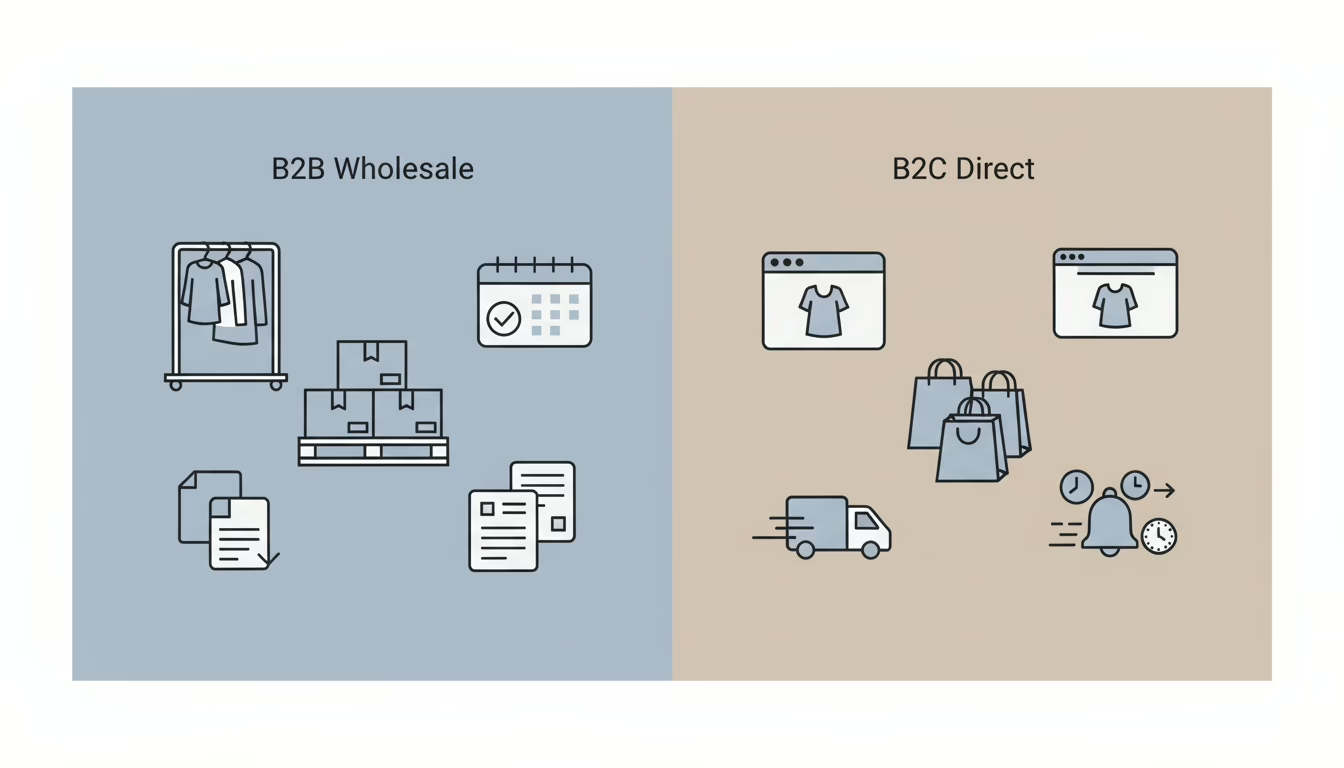
Understanding B2B vs. B2C Inventory Needs
Before diving into solutions, it’s crucial to understand why managing B2B and B2C inventory simultaneously creates such unique challenges.
B2B Wholesale Characteristics
Wholesale orders follow a different rhythm than direct-to-consumer sales. Your retail partners typically place larger orders with longer lead times, often ordering full size runs months in advance. These bulk purchases require careful planning around production cycles and delivery schedules.
Payment terms add another layer of complexity. Many wholesale buyers operate on net-30 or net-60 payment schedules, which means you need to carefully track accounts receivable while managing cash flow. You’re also dealing with pre-orders and seasonal buying windows that require you to allocate inventory before it even arrives at your warehouse.
B2C Direct Sales Characteristics
Your direct-to-consumer channel operates at a completely different pace. Individual orders need to ship within days, not weeks. Customers expect immediate availability, and stockouts can send them straight to competitors.
The order patterns are less predictable too. While wholesale buyers place structured orders during buying seasons, your DTC sales fluctuate based on marketing campaigns, social media trends, and seasonal demand. You might sell three units one day and thirty the next.
Returns management also differs significantly. Individual consumers return items more frequently than wholesale accounts, and each return needs to be processed quickly to get inventory back on your virtual shelves.
The Core Tension
Here’s where things get tricky. Both channels are pulling from the same inventory pool, but they operate on completely different timelines and expectations. Promise too much to wholesale partners, and you’ll face stockouts on your website. Prioritize DTC too heavily, and you’ll miss out on the bulk revenue that wholesale provides. Without proper systems in place, you’re left manually juggling spreadsheets, making educated guesses about allocation, and hoping nothing falls through the cracks.
Strategies for Stock Allocation
Smart stock allocation doesn’t happen by accident. It requires deliberate planning and the right analytical frameworks.
ABC Analysis for Inventory Prioritization
ABC analysis helps you categorize your inventory based on revenue impact. Your “A” items are your top performers—they generate the most revenue and deserve the closest attention. These are the styles you can’t afford to run out of, whether a wholesale buyer or website customer wants them.
“B” items contribute steady sales but don’t carry the same weight. You still need to manage them carefully, but they allow for more flexibility in allocation decisions.
“C” items are your slow movers. These products might be end-of-season styles or experimental designs that didn’t catch on. You can be more relaxed about allocation here since they’re not driving significant revenue.
By categorizing your inventory this way, you can make smarter decisions about which products need dedicated allocation to specific channels and which ones can flow more freely based on demand.
Demand Forecasting Techniques
Historical data is your best friend when forecasting future demand. Look at sales patterns from previous seasons, accounting for both wholesale orders and DTC sales. Did certain styles sell out faster than expected? Did wholesale buyers reorder specific items mid-season?
Pay attention to external factors too. Fashion trends, social media buzz, and even weather patterns can impact demand. If your Instagram post featuring a particular style went viral last spring, factor that into your forecast for next year.
For wholesale specifically, maintain open communication with your retail partners. Many will share their sales data or give you advance notice about upcoming promotions that could spike demand for certain styles.
Channel-Specific Allocation Rules
Rather than letting all channels compete for the same inventory in real-time, consider setting allocation rules based on your business priorities. You might reserve a percentage of incoming inventory for wholesale commitments while keeping the remainder available for DTC sales.
These rules shouldn’t be rigid. Build in flexibility to adjust allocations based on actual demand patterns. If your wholesale orders are slower than expected but DTC is booming, you need the ability to shift inventory accordingly.
Safety stock is another critical consideration. Maintaining buffer inventory for your top-selling items in both channels prevents stockouts and keeps customers satisfied. The exact amount depends on your lead times, demand variability, and risk tolerance.
Software Solutions for Wholesale Inventory Management
The right wholesale inventory management software transforms inventory allocation from a daily headache into an automated, strategic advantage.
Real-Time Inventory Synchronization
Your software should connect all your sales channels into one centralized hub. When a wholesale order comes through NuORDER or JOOR, your Shopify store should immediately reflect updated inventory availability. When a customer purchases on your website, your wholesale platform needs to see that change instantly.
This real-time synchronization prevents overselling and eliminates the need for manual inventory adjustments across multiple systems. You gain complete visibility into what’s available, what’s committed, and what’s in transit.
Multi-Channel Order Management
Look for software that processes orders from all channels through a single interface. Instead of logging into five different platforms to manage orders, you should see everything in one place—whether it’s a bulk wholesale order, a DTC purchase, or a marketplace sale.
This centralized approach speeds up fulfillment and reduces errors. Your warehouse team doesn’t need to check multiple systems to pick, pack, and ship orders. Everything flows through one organized queue.
Automated Allocation Rules
The best systems let you set sophisticated allocation rules that automatically reserve inventory based on your business logic. You can prioritize certain wholesale accounts, set aside inventory for pre-orders, or ensure your website always maintains minimum stock levels for top sellers.
These rules should be flexible enough to adjust as your business evolves. During peak selling seasons, you might shift more inventory to DTC. During wholesale buying windows, you’ll want to ensure you can fulfill larger orders.
Purchase Order Management
Your software should help you manage the entire production cycle, from creating purchase orders with manufacturers to tracking inbound shipments. As new inventory arrives, the system should automatically update availability across all your channels.
Detailed purchase order tracking also helps you hold manufacturers accountable and plan for future inventory needs based on actual lead times and production capacity.
Returns and Exchange Processing
Returns happen in fashion. Your software needs to handle them efficiently, whether they’re coming from wholesale partners or individual customers. When items are returned, they should quickly flow back into available inventory so you can resell them.
Integration with returns management apps like Loop Return can streamline this process, automatically creating return labels, processing exchanges, and updating inventory counts without manual intervention.
Reporting and Analytics
Data drives better decisions. Your wholesale inventory management software should provide detailed reports on sales velocity, inventory turnover, channel performance, and profitability. These insights help you identify which products deserve more investment, which channels are underperforming, and where you can optimize margins.
Look for software that makes this data accessible without requiring advanced technical skills. Pre-built dashboards and customizable reports save time and help your entire team stay aligned on inventory performance.
Integration Capabilities
Your inventory software doesn’t exist in isolation. It needs to connect with your accounting platform (like QuickBooks or Xero), shipping solutions (like ShipStation), wholesale platforms (like NuORDER, JOOR, or Brandboom), and your ecommerce store (typically Shopify for fashion brands).
The more seamlessly these systems communicate, the less time you spend on manual data entry and reconciliation. Choose software with proven integration capabilities and responsive support when you need help connecting new tools.
How Generic Tools Compare to Wholesale-Focused Software
| Capability | Generic Inventory Tool | Wholesale-Focused (e.g. Blastramp) |
| B2B bulk order handling | Manual or basic | Automated with PO flow |
| Channel-specific allocation | ❌ | ✅ (ABC + channel rules) |
| Wholesale platform sync (Brandboom, NuOrder, JOOR) | ❌ | Native integrations |
| Style-color-size matrix | Basic variants | Full fashion matrix |
| Oversell prevention across B2B + B2C | ❌ | Real-time cross-channel |
| Pre-order inventory allocation | ❌ | Dedicated allocation logic |
Finding the Right Fit for Your Fashion Brand
Not all wholesale inventory management software is created equal, and what works for a brand doing $50 million in annual sales might be overkill (or insufficient) for a company at $5 million.
For mid-market fashion brands under $20 million in revenue, you need software that’s sophisticated enough to handle complex multi-channel operations but intuitive enough that your team can use it without extensive training. You want a solution that scales with your growth rather than one you’ll outgrow in two years.
Consider your specific operational challenges. Are you struggling with overselling? Prioritize software with robust real-time synchronization. Do you have complex wholesale relationships with various payment terms and pre-order schedules? Focus on platforms with strong B2B order management features.
The investment in proper software pays dividends through reduced stockouts, fewer fulfillment errors, better cash flow management, and the ability to scale without proportionally increasing your administrative headcount.
Take Control of Your Inventory
Balancing B2B wholesale and B2C direct sales doesn’t have to feel like a constant juggling act. With the right strategies and wholesale inventory management software, you can maintain healthy inventory levels across all channels, fulfill orders efficiently, and make data-driven decisions that drive profitability.
The fashion brands that thrive are the ones that build strong operational foundations early. They invest in systems that provide visibility, automate manual processes, and scale alongside their growth.
If you’re ready to stop fighting inventory fires and start managing your stock strategically, it’s time to explore software solutions built specifically for fashion brands navigating multi-channel complexity. Ready to see how the right system can transform your operations? Request a demo to discover how Blastramp’s wholesale inventory management software helps fashion brands under $20M eliminate overselling, streamline fulfillment, and scale efficiently across B2B and B2C channels.
Frequently Asked Questions
Q1. How does wholesale inventory software prevent overselling across B2B and B2C channels?
Blastramp maintains a single shared inventory pool across all your channels — Shopify, JOOR, NuOrder, dropship, and manual wholesale orders — so every sale instantly decrements the same central stock count. There’s no batch sync delay where two channels can both “see” the same unit and sell it.
On top of that real-time sync, Blastramp gives you soft and hard allocation tools so you can reserve inventory against confirmed wholesale POs before fulfillment, configure available-to-sell (ATS) buffers per channel, and set order priority rules that determine which channel gets fulfilled first when stock is tight. The result: your wholesale commitments stay protected, and your DTC channel never oversells into inventory that’s already spoken for.
Q2. What allocation rules should fashion brands use for wholesale vs DTC inventory?
Blastramp supports the allocation frameworks that growing fashion brands actually use in practice. The most effective approaches include tiered priority allocation, where you reserve a fixed percentage of each style for wholesale accounts before opening DTC availability. From there, you can layer in account-tier reservations that segment your wholesale accounts — key accounts, independents, dropship partners — and allocate inventory proportionally, with key accounts drawing first against confirmed minimums.
At the start of each season, Blastramp lets you lock wholesale commitments based on confirmed POs so DTC only sees what remains after those reservations are in place. Safety stock thresholds add another layer of protection, preventing DTC promotions from draining stock needed to fulfill wholesale orders already on the books. And when the season closes, you can flip unsold wholesale inventory to DTC or outlet channels with a rule change rather than a manual restock process.
All of this is configurable without custom development, so your allocation logic keeps pace with how your business actually operates season to season.
Q3. Can I manage preorders and backorders for wholesale accounts?
Yes — and for fashion brands running seasonal buys, this is one of Blastramp’s most valuable capabilities.
On the preorder side, Blastramp lets you take confirmed wholesale POs against styles that haven’t arrived yet, pre-selling your inbound production across your selling season — often six to nine months ahead of ship dates. The system tracks committed versus in-warehouse quantities and queues fulfillment automatically when inventory lands, with inbound PO quantities pegged to specific wholesale orders so they can’t be redirected to DTC in the meantime.
For backorders, when a wholesale account orders a style you’re temporarily out of, Blastramp accepts it into a backorder queue rather than rejecting the order outright. When stock arrives from production or returns, the queue fulfills in sequence. You get partial shipment controls, expected delivery visibility per PO line, and automatic status updates to accounts when backorders are resolved.
Blastramp also supports hold and cancel policies tied to your contractual ship windows — so if you can’t fulfill within the agreed date, the order flags for renegotiation rather than silently aging in the queue.
Q4. How does returns processing differ for wholesale vs retail returns?
Wholesale and DTC returns are operationally very different, and Blastramp handles both workflows separately.
| Dimension | Wholesale Returns | DTC / Retail Returns |
| Volume | Large batch (pallets, cases) | Individual units |
| Trigger | Seasonal buyback, damage claims, overstock | Customer dissatisfaction, wrong size/color |
| Authorization | Pre-negotiated return authorization (RA) | Often self-service via portal |
| Financial resolution | Credit memo against future orders | Refund to card or store credit |
| Inventory re-intake | Sellable, wholesale-grade, or B-stock pools | Sellable or damage write-off |
| Compliance burden | EDI chargebacks, deductions, routing violations | Lower — return label + tracking |
Wholesale returns typically arrive in large batches — pallets or cases — triggered by seasonal buybacks, damage claims, or retailer overstock. They require a pre-negotiated return authorization before product moves, resolve financially through credit memos against future orders, and feed back into first-quality, wholesale-grade, or B-stock inventory pools depending on condition.
For brands dealing with large retail partners, there’s an added layer of complexity: many retailers deduct returns directly from invoice payments rather than sending product back, which means your software needs to reconcile those financial deductions against your accounts receivable rather than treating them as a physical return.
DTC returns, by contrast, are individual units triggered by customer dissatisfaction, sizing issues, or wrong item received. They’re typically self-service, resolve as a card refund or store credit, and feed back into sellable or write-off pools with minimal manual handling.
Blastramp supports RA workflows, credit memo generation, and B-stock re-categorization on the wholesale side, while keeping DTC return intake straightforward. Both workflows route correctly through your connected 3PL or WMS so receiving teams always know what they’re processing and why.
Q5. What does wholesale inventory management software cost for mid-market fashion brands?
The right question for mid-market fashion brands isn’t just what a platform costs — it’s whether the platform was actually built for the way you operate. Many inventory tools are built for DTC first, with wholesale added as an afterthought. That means size/color matrix support is shallow, B2B marketplace integrations like JOOR and NuOrder are bolt-ons rather than native connections, and the order management logic doesn’t account for the complexity of running wholesale and DTC from the same inventory pool.
Blastramp was built from the ground up for fashion and apparel brands managing B2B, B2C, wholesale, and dropship simultaneously — with 20+ years in the industry and 140,000 Black Friday orders processed. When you’re evaluating platforms, look past the monthly fee and ask how the platform handles your specific channel mix, whether integrations are first-class or patched together, and what implementation and onboarding support actually looks like before you go live.