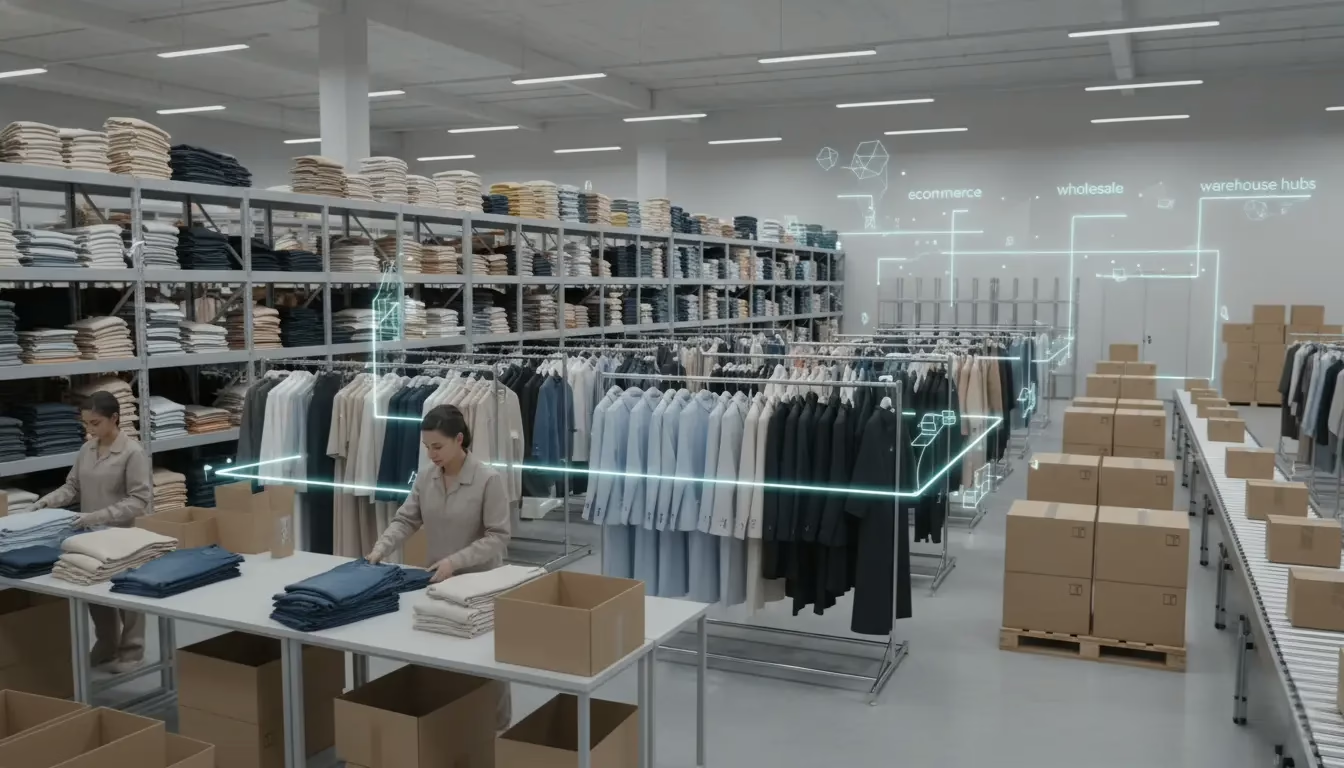
Fashion brands face a perfect storm as they grow: overselling, high return rates, split shipments, and disconnected systems.Most apparel teams don’t struggle because they lack tools—they struggle because their tools don’t talk to each other.
When inventory lives in one system, fulfillment in another, and wholesale in spreadsheets, the result is predictable:
- 1–3% of revenue lost to oversells
- 20–40% return rates
- Slower picking, rush freight, and missed wholesale windows
This is why leading apparel brands are moving toward unified warehouse and inventory management software—one operational backbone that keeps every channel aligned in real time.
Featured Snippet: Quick Wins from Unifying Systems
- One platform prevents double-allocated SKUs
- Real-time sync speeds fulfillment and reduces rush freight
- Unified ATP protects wholesale ship windows
- Picking and packing time drops 20–40%
The key is using the right mix of WMS and IMS, not chasing buzzwords.
WMS vs IMS: Choose Based on Complexity, Not Hype
A common mistake is asking “Do we need WMS or IMS?”
The better question is:
How complex are our operations today—and where are they headed?
Rule of Thumb
- Under ~3,000 orders/month, few SKUs, 1–2 locations:
Start IMS-first - Over 5,000 orders/month, many variants, multiple locations or 3PLs:
You likely need WMS - Most fashion brands:
End up with a hybrid model
Complexity—not company size—drives the decision.
What’s the Difference Between WMS and IMS?
| System | What It Controls |
| Inventory Management Software (IMS) | SKUs, variants, multi-channel sync, POs, forecasting, ATP |
| Warehouse Management Software (WMS) | Labor, barcode scanning, picking, packing, shipping, cycle counts |
- IMS decides what can be sold
- WMS ensures it’s picked and shipped correctly
Barcode scanning alone can push pick accuracy to 99%+—a massive win for apparel.
Operational Signals That Tell You Which Path to Take
You’ll likely need WMS support if:
- SKU variants exceed 500
- Returns exceed 20%
- You ship from multiple locations or 3PLs
- Wholesale requires partial releases
Lean IMS setups still work well when:
- You sell mostly DTC
- SKUs are limited
- Order volume is predictable
Fashion rarely stays simple for long—which is why hybrid setups are so common.
The Hybrid Apparel Model (The Reality for Fashion Brands)
Most apparel brands run:
- IMS for inventory truth and ATP
- WMS for floor execution and speed
Why Hybrid Works
- Batch, zone, or wave picking improves throughput 15–30%
- Partial releases protect OTIF for key wholesale accounts
- Inventory stays centralized even as fulfillment scales
Hybrid isn’t a compromise—it’s the default for fashion.
Real-Time, Multi-Location Inventory Control
Oversells usually come from latency, not mistakes.
Best-in-class apparel setups run:
- Sub-10-second inventory sync
- Channel-level reservations
- Live node visibility across DTC, wholesale, and 3PLs
A Shopify store, a marketplace, and a 3PL must all see the same available inventory, at the same time.
Available-to-Promise (ATP), Reservations, and Buffers
ATP = what you can sell after:
- Safety stock
- Reservations
- In-transit inventory
- Channel buffers
Fashion brands often use:
- 2–5% promo buffers
- Pre-order cutoffs for drops
- Reserved inventory for wholesale windows
This protects key accounts while still maximizing sell-through.
Smart Order Routing Across Locations
Routing orders by:
- SLA
- Proximity
- Carrier mix
…can reduce shipping costs 10–15% and dramatically cut split shipments.
Live node visibility ensures orders ship from the best location—not just the default one.
PO-Driven Replenishment and Forecasting
When forecasts drive purchase orders:
- Rush freight drops 15–30%
- Stockouts become predictable—not reactive
Apparel teams must plan around:
- Long lead times
- Pre-packs vs open stock
- Size curves by color and style
Automation with guardrails keeps buying disciplined without slowing growth.
Apparel-First Fulfillment Workflows
Scanning reduces mis-picks 50–70%.
Best practices:
- Batch picking for DTC
- Wave picking for wholesale
- Zone picking for large facilities
Pick logic must understand variants, substitutions, and bundles—not treat apparel like generic SKUs.
Partial Wholesale Releases and Allocations
Wholesale success depends on controlled releases.
Example:
- Ship 60% now
- Hold 40% for a future window
This protects ATP integrity and prevents accidental over-commitment. Partial now, protect future.
Returns and Reverse Logistics (Core, Not Optional)
With returns at 20–40%, speed matters.
Best-in-class flow:
RMA → Grade → Disposition → Restock
Resellable items should return to inventory within 24–48 hours to recover margin.
Integrations That Make or Break Unification
Unified warehouse and inventory management software must connect natively with:
- Shopify / Shopify Plus
- QuickBooks
- ShipStation
- 3PLs and dropship partners
- B2B marketplaces like JOOR and NuORDER
Event-driven sync and idempotent updates prevent double-allocations and reconciliation issues.
B2B Wholesale Portals Reduce Admin Load
Native B2B portals:
- Cut customer service work 30–50%
- Show live ATP
- Support net terms and price lists
- Allow buyers to request partials
Spreadsheets don’t scale. Portals do.
Business Intelligence That Guides Decisions
Track what matters:
- OTIF
- Fill rate
- Pick accuracy
- Returns by reason
- Weeks of supply by size curve
- Aging inventory
Dashboards turn data into action—for buying, staffing, and planning.
Unified Platform vs Connected Apps
| Approach | Tradeoff |
| Unified Platform | Faster deployment, lower TCO, less integration upkeep |
| Best-of-Breed Stack | More flexibility, higher maintenance and risk |
For SMB fashion brands, speed-to-value usually wins.
Implementation by Growth Stage
- Under $2M:
Lean IMS + shipping + basic scanning - $2M–$10M:
Unified IMS + WMS + 3PL support - $10M–$20M:
Advanced WMS, labor KPIs, automated returns grading
Crawl → Walk → Run—with guardrails.
Real-World Controls That Prevent Oversells
Screenshot this:
- Safety stock per SKU
- Channel buffers (2–5%)
- Drop blackout windows
- Idempotent event processing
- Daily reconciliation queues
Small buffers + smart reservations = big margin protection.
Pricing and ROI for Sub-$20M Fashion Brands
Most brands see payback in months, not years, from:
- Fewer oversells
- Faster picking
- Reduced rush freight
- Faster returns recovery
Transparent pricing and integration depth matter more than feature count.
How Blastramp Unifies Warehouse and Inventory Management
Blastramp was built specifically for this problem.
- Blastramp HQ (IMS) from $750/month
- Blastramp WMS from $1,500/month
- Apparel-native size/color matrices
- Partial order releases
- Returns grading
- Proven peak performance (140,000 BFCM orders processed)
Brands often start by unifying inventory first—then layer in WMS for speed.
Wrapping Up
For fashion brands, unifying warehouse and inventory management software is no longer optional.
It’s how you:
- Stop oversells
- Reduce returns drag
- Protect wholesale windows
- Scale without adding headcount
Use operational signals—orders, SKUs, locations, and returns—to choose IMS, WMS, or the hybrid model most apparel teams need.
🚀 Ready to consolidate systems and protect revenue?
Explore integrations, schedule a demo, or start a trial at:
👉 https://blastramp.com/integrations/