Returns Are an Operations Problem, Not Only a Customer Service Problem
In apparel, some returns are normal. Fit, color preference, gift buying, and size uncertainty all play a role. But many returns start with operational data problems.
A customer orders a black medium jacket because the site says it is available. The warehouse substitutes late, ships the wrong size, or cancels after payment. A wholesale buyer receives a partial order without a clear backorder plan. A returned unit sits in a bin for nine days while Shopify still shows a stockout. Each case creates avoidable cost.
The National Retail Federation reported that U.S. retailers expected returns to total $890 billion in 2024. That figure is across retail, not just apparel, but it shows why returns are not a side issue for operators. Returns affect margin, labor, inventory, and customer trust.
For apparel operations managers, the most useful question is: which returns are caused by customer choice, and which are caused by poor data? The second group is the one your team can attack.
Start by Separating Preventable Returns From Expected Returns
Not every return deserves the same response. A customer who orders two sizes and keeps one is different from a customer who returns an item because the wrong size shipped.
Build a return reason map with categories the operations team can act on:
- Wrong size shipped
- Wrong color shipped
- Item not as expected
- Duplicate order
- Late delivery
- Damaged item
- Fit preference
- Buyer changed mind
- Wholesale short shipment
- Return after exchange
Then group those reasons into two buckets:
| Expected Returns
Fit preference, size uncertainty, buyer choice, gift buying |
Preventable Returns
Wrong item, late shipment, duplicate order, poor product data, stock errors |
A Shopify store can collect return reasons, but the reasons only help if they connect back to order, inventory, and fulfillment data. If returns data sits apart from the system that controls stock and orders, the operations manager sees symptoms instead of causes.
Blastramp helps by centralizing inventory and order data, so the team can trace a return back to the order source, SKU, channel, warehouse action, and return-to-stock timing.
Use Inventory Accuracy to Prevent Wrong-Order Returns
Inventory accuracy is the base layer. If the system says a unit is available but the warehouse cannot find it, the team may substitute, delay, cancel, or ship late. All four can create returns or customer support work.
For apparel brands, inventory accuracy is harder than counting one product. The team must track size and color variants, wholesale reservations, DTC orders, returns waiting for inspection, and stock sitting with a 3PL.
A small error travels fast:
| 1. A returned small ivory top is placed in the wrong bin.
2. The system still shows one small ivory top available. 3. Shopify sells it. 4. The picker finds only a medium ivory top. 5. Customer service asks whether to substitute, cancel, or delay. 6. The customer is now more likely to return or complain. |
This is why operations managers should review inventory accuracy by variant, not only by total style count. A style can look healthy at the style level while one key size is wrong.
For return reduction, the key move is to connect returns back to the inventory record fast enough to prevent new errors.
Fix Order Routing Before It Creates Late or Split Shipments
Order routing decides where an order should be fulfilled. If routing rules are unclear, the warehouse may ship from the wrong location, split orders poorly, or delay orders while staff check stock manually.
That matters for apparel because speed and accuracy both affect return behavior. A customer ordering for an event may return the item if it arrives too late. A wholesale account may reject or dispute a shipment if routing errors create short packs or missed delivery windows.
Operations managers should review routing rules for:
- Shopify orders versus wholesale orders
- Priority accounts
- Backorders
- Split shipments
- 3PL availability
- Dropship items
- Warehouse cutoff times
- Preorder and seasonal drop rules
A common failure happens during launches. Shopify sells fast, wholesale has reserved inventory, and the 3PL receives pick tickets before the final reservation file is updated. The warehouse does what the system tells it, but the system is stale.
The fix is not another spreadsheet. The fix is a shared order view that shows what is available, what is reserved, what is allocated, and what has shipped.
Connect Shopify Order Data With Return Reasons
Shopify order data is often the clearest view of what the customer bought, when they bought it, and how the order moved. But return reduction needs more than the Shopify order record alone.
An operations manager should connect Shopify data with:
- Inventory availability at purchase time
- Warehouse pick and pack data
- Shipping status
- Return reason
- Return condition
- Exchange outcome
- Customer support notes
This helps the team find repeat patterns:
- If one size has a high return rate across several colors, the issue may be fit or product data.
- If one warehouse picker causes more wrong-size returns, the issue may be process or bin layout.
- If returns spike when Shopify stock is low, the issue may be allocation or substitution decisions.
Keep the analysis practical. Do not build a huge dashboard before the team can answer basic questions. Start with the top five return reasons by SKU, channel, and warehouse location.
Speed Up Return-to-Stock Without Hiding Quality Issues
A fast return-to-stock process protects revenue, but speed cannot come at the cost of bad quality control.
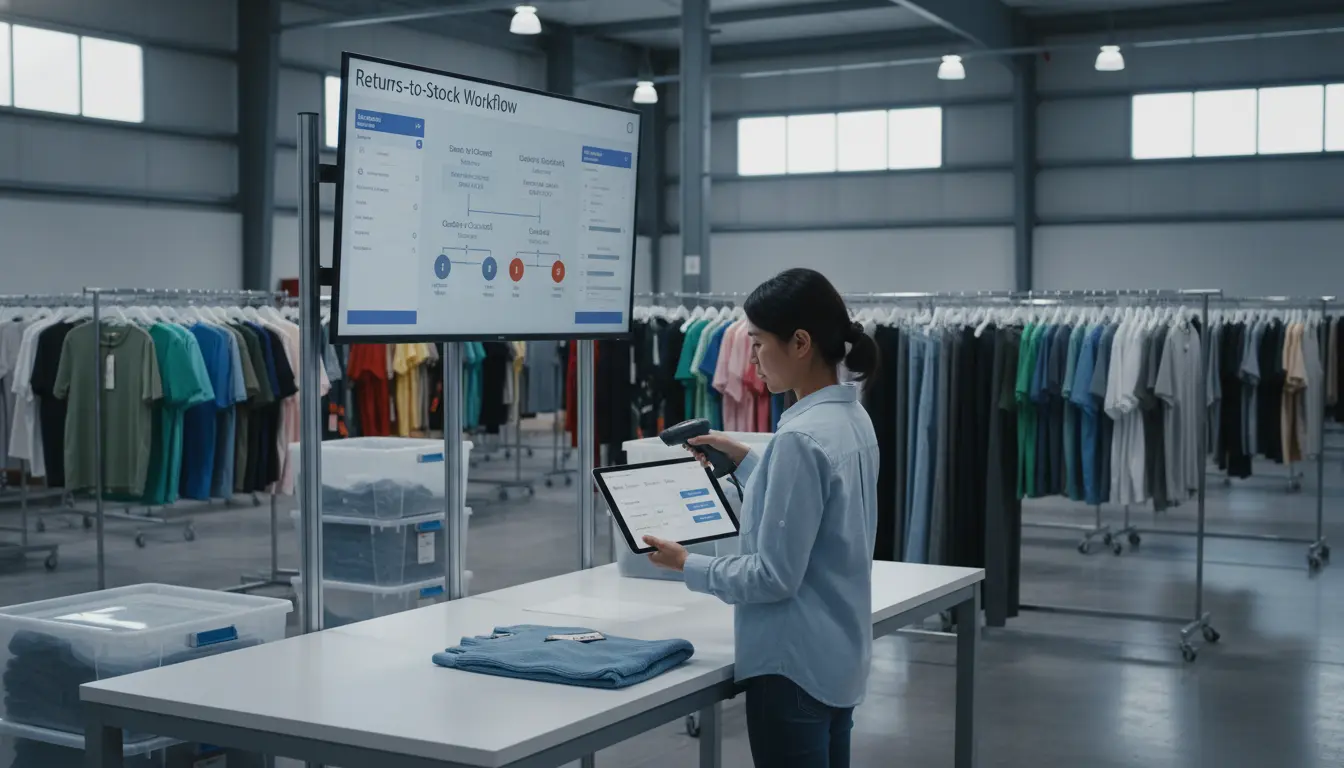
Returned apparel needs a clear inspection path:
- Return arrives.
- Staff scan or record the item.
- Item is inspected for condition.
- Sellable units go back into available inventory.
- Damaged or unsellable units are separated.
- Refund or exchange status is updated.
- The reason code feeds reporting.
The problem comes when returned units sit between steps. They are physically in the building, but not sellable in the system. During peak periods, that delay can hide stock from Shopify and wholesale reps.
For seasonal apparel, timing is even tighter. A returned holiday dress in January may have far less resale value than the same return processed in December.
Operations managers should track:
- Average days from return received to inspection
- Average days from inspection to sellable inventory
- Percent of returns resold
- Percent marked damaged
- Repeat return reasons by SKU
- Returns waiting longer than a set threshold
These are small controls, but they help the team see where returns slow down stock availability.
Build a Weekly Returns Reduction Review
Returns reduction needs a rhythm. A monthly report is often too slow for fast-moving apparel. A weekly review gives the operations manager enough time to catch issues before they repeat.
A 30-minute weekly review can cover:
| • Top returned SKUs
• Top preventable return reasons • Wrong-item returns by picker or location • Late shipments by channel |
• Return-to-stock backlog
• Wholesale disputes or short shipments • Shopify stockouts followed by later return additions |
Bring customer service, warehouse, ecommerce, and wholesale into the same conversation when needed. The point is to close data gaps between teams.
The operations manager becomes the link between return symptoms and process changes.
How Blastramp Helps Reduce Preventable Returns
Blastramp does not promise that apparel returns vanish. What Blastramp can do is give teams cleaner control over the data that causes preventable returns.
| Inventory visibility | By size, color, channel, and location |
| Order data | From Shopify, wholesale, and all connected systems |
| Order status | Clear view across open, allocated, fulfilled, returned, and restocked items |
| Integrations | ShipStation, 3PLs, Loop Returns, QuickBooks, and other connected tools |
| Industry expertise | Fashion-aware workflows built from 20+ years of industry experience |
For brands preparing for Black Friday, seasonal drops, or wholesale growth, the benefit is control. Teams can see problems sooner and correct them before they become repeat returns.
If your return reasons point to inventory and order data problems, request a Blastramp demo and walk through your current workflow with the team.
Frequently Asked Questions
How can an operations manager reduce apparel returns?
Start by separating preventable returns from normal fit or preference returns. Then connect return reasons to inventory records, order routing, warehouse actions, and Shopify order data.
What return reasons should apparel brands track?
Track wrong size, wrong color, late delivery, damaged item, item not as expected, fit preference, duplicate order, and buyer changed mind. Add wholesale-specific reasons if B2B orders are a major channel.
Does better inventory data reduce returns?
Yes, when returns are caused by stock errors, wrong picks, late shipments, or poor order routing. Better data will not remove fit-based returns, but it can reduce avoidable operational returns.
Why does return-to-stock timing matter?
A returned unit is not useful until it is inspected and added back to sellable stock. Slow return-to-stock processes hide inventory and can lead to avoidable stockouts.
What systems should connect to reduce returns?
At minimum, connect Shopify, inventory, fulfillment, return, and order management data. Accounting and customer service data can also help with finance and support analysis.